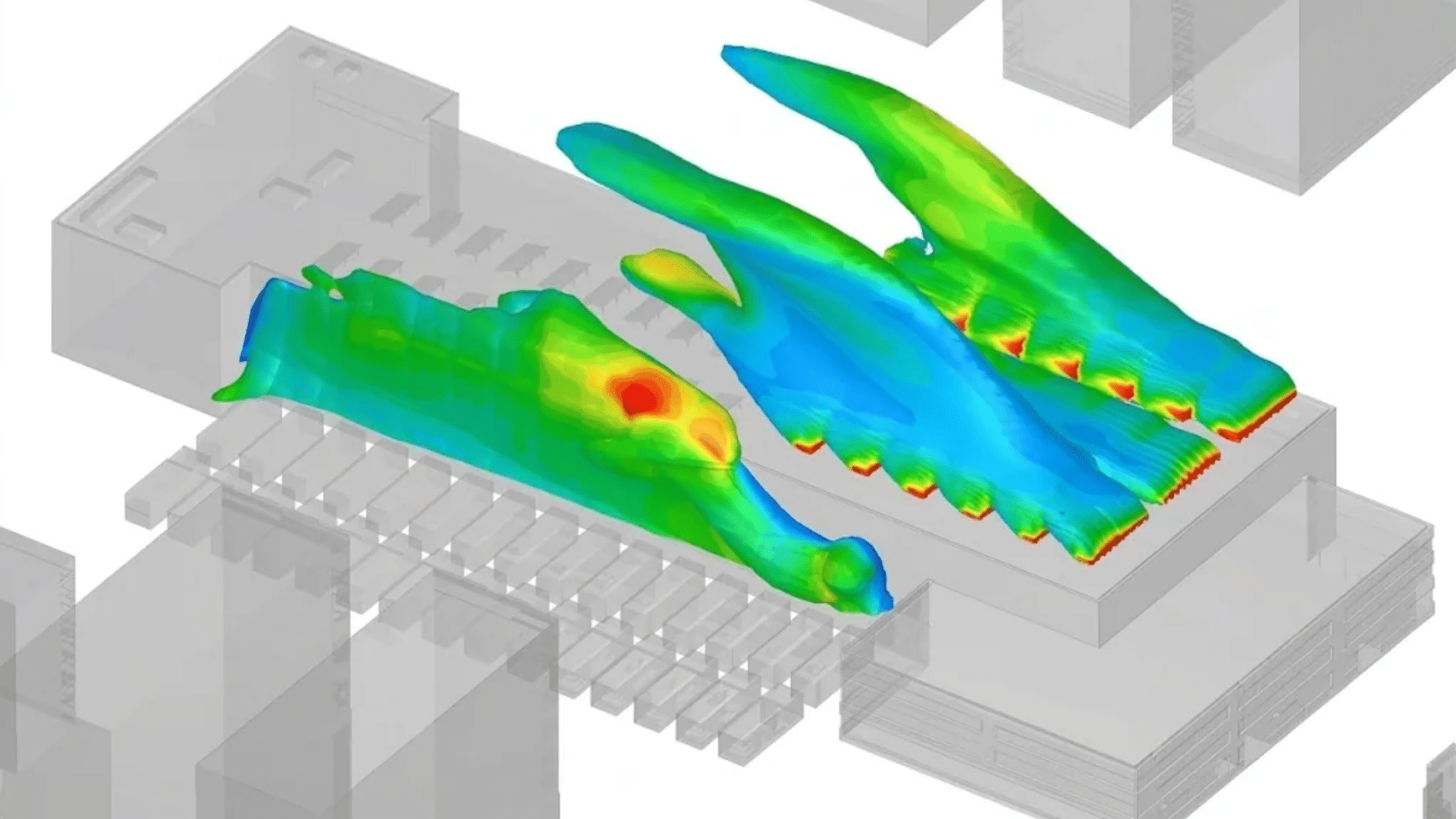
Fish passes are hydraulic structures that allow fish to move freely, enabling them to bypass river barriers such as weirs or small dams. This article presents two fish passes with different operating mechanisms, modelled using CFD.
WHY ARE THESE STRUCTURES NECESSARY?
A transverse barrier is any type of man-made structure that impedes the natural flow of rivers. These barriers play an important role in our society, enabling water to be diverted for irrigation, water supply and water management; however, they present an insurmountable obstacle for many species of aquatic fauna, which migrate along the river during their life cycle.
Even groups of fish with a great ability to leap, such as salmonids, are prevented from swimming upstream by these barriers. This is why fish passes must be constructed to allow wildlife to pass through whilst maintaining the functionality and services provided by the weir.
FACTORS TO TAKE INTO ACCOUNT IN THEIR DESIGN
There are various types of flow-through devices, each with very different operating principles, but the design of all of them must take the following factors into account:
- Target species: it is important to investigate which fish or groups of fish will use the device, as not all species have the same swimming or jumping abilities.
- Migration season: all fish migrate to a greater or lesser extent in search of food or shelter. Migrations for reproductive purposes are particularly important, as spawning usually takes place in the upper reaches of rivers.
- Functional window: not all fish passes need to be operational 365 days a year, but a sufficiently wide range of flow rates must be ensured to allow the structure to function during key migration periods.
- Obstacle to be made passable and surrounding environment: the height of the obstacle and the conditions of the surrounding environment limit the types of structures that can be built, as well as their dimensions. Structures such as naturalised ramps have a low impact on the landscape but require much more space than trough-style steps.
Example of a fish passage
The various types of trough ladders are distinguished by the type of discharge. In this case, it is a submerged overflow ladder (also known as a side-cut ladder). This type of ladder features both free-flow (equal to the difference in level between the tanks) and submerged overflow. This duality allows the fish to choose how they ascend according to their preferences, although there is usually a preference for the submerged overflow.


The design of the ponds allows for speeds at which the fish can swim through, whilst also providing slow-flowing backwaters where they can rest.
UPWARD FLOW RAMP

This type of structure has a more natural appearance, causing less of an impact on the landscape. It consists of a gently sloping ramp with large boulders arranged in rows.
Due to the arrangement of the boulders, this ramp has the distinctive feature of generating updrafts. Consequently, the effort required by the fish to swim upstream is considerably reduced, as there are areas where the current flows against the gradient.